Monday, May 5, 2014

I'm Back!

Mark Twain said: "Giving up smoking is the easiest thing in the world. I know because I've done it thousands of times."

Well I guess that's how it is for me when it comes to giving up on sight-reading. I just can't stay away. I'm back to working on it, but my new study program is more focused and less time-consuming. I'll tell you all about it, but first ...

What I've Been Up To

In my last post, I talked about giving up on, or at least giving less priority to, sight-reading. That's what I did, and it has been a good thing for my general playing, because it has given me more time to spend working on  other skills. For example, I've added new songs to my solo jazz repertoire, gotten more licks down, done more exercises, and worked on the general sound of my jazz playing. This feels good, and I realize that I've been neglecting this stuff in favor of sight-reading.

I'm a morning person, and the thing I do right after breakfast gets the most of my energy. For years, that thing has been sight-reading. Since "quitting," other tasks have been granted that "most favored concentration" status.

Another thing I've had more time for is writing. As you can see on the right side of this page, I've written a book. The book is a bit different from this blog, with a summary chapter or two, but most of the important information is available right here in the blog you are reading. If you're a tightwad like me, you'll be fine with just the blog. If you prefer to curl up with a physical book or with your eBook reader, you'll probably enjoy the book (end of commercial).

I've talked about how valuable piano lessons are for improving one's sight-reading. I still believe this is true, but once I gave  sight-reading a lower priority, I could no longer justify the expense of lessons. I reluctantly stopped taking lessons. Note, however, that I've received so many valuable tips on sight-reading from my teacher, that I can continue to benefit from them for years.

Finally, I felt that I was letting you down, dear blog readers, by quitting. In fact there were a number of times over the years that I would have given up were it not for my public blog.

You may have noticed that there's a real up and down aspect to my quest. Some days I'm encouraged, other days, discouraged. Sometimes I feel like I'm doing great, other times: Epic Fail. So it's not surprising that I went so far as to publicly give up then publicly start again.

So here we go again, and now, perhaps, I've found a way to maximize my returns.  That is, I'm ...

Following My Own Advice!

That's right. I've been spouting plenty of advice over the years, and now I'm going to focus in on my best tips, namely:

1. Practicing Much Less per Day

You've heard me say that two hours per day was not efficient, and might even result in the practicing of bad habits. So now I generally do only about two tunes per day, sometimes less.

2. Working Only on Modern/Pop Stuff

I've mentioned that sight-reading progress can be very specific to the type of music you work with. So, for example, if you play only hymns, you'll get good at hymns but not at, for example, pop tunes.

So: No more hymns or classical pieces. Yes, it would be nice to be good at those, but, for me, it's more important to be good at modern stuff. By "modern" I mean pop tunes or typical written-out jazz pieces--the kind of music you'd see in a book of Christmas carols. I'll miss the hymns, but I've got to work where my priorities lie.

3. Practicing Leaving Things Out

You may recall that my teacher taught me the value of leaving out stuff. She had me leave out one or more of the voices when playing a hymn. This was more difficult than expected, but I could see the benefit: when I ran into trouble, I could leave out voices.

I had done this with hymns but never with modern tunes. Now I am applying it to modern music. I'll play a tune through the first time playing only the top and bottom notes. The important skill is learning what to do when I get in trouble.

At first, seems that it would be just as easy, for example, to play the doubled octave bass notes, or the chords in the top. But it is a little easier, as my teacher Robin showed me, to just grab two notes (or even just the melody) when problems arise.

I'll often run through a second time (or take the repeat), and play all the notes  (or more of them).

Does it sound better with all the notes? Yes. Does it sound reasonable with just the top and bottom notes? Often. IOW, if I sometimes get into trouble and leave things out, most listeners won't notice.

4. Looking Ahead

As you've read, I'm always working on this. Perhaps combined with leaving things out, I will finally improve here.

Summary

My new regime feels like a good compromise, and, if I'm right about practicing less, I will learn more efficiently.

Stay tuned!

Tuesday, December 10, 2013

I Give Up! -- Or Do I?

[January 6, 2014: After writing this, I've changed my mind.  I'm not going to give up, although I'll be spending less time on sight-reading.  I've been working on a book which is based on this blog, and it made me realize (1) how much I want to be a good sight-reader and (2) how much progress I made.  From now on, I will concentrate primarily on reading modern/pop type music, and not try to get better at hymns or classical pieces. So read the rest of this post with that in mind, and watch for my book on Amazon.  It will be entitled "Become a Great Sight-Reader -- or Not!"]

That's right, I give up.  I apologize to any of you who have been inspired by my quest, but I have decided that my brain is just not wired for sight-reading, and pursuing this any longer is not a good use of my time.

Note that my reading has improved, and instead seeing this as "giving up," I could have framed it as "I've improved my sight-reading enough, and now I'm going to move on to other things."  But that's not how it feels.  After almost six years of concerted effort, I still don't read very well.

I'm quite sure that I did everything right.  I practiced diligently for thousands of hours (literally) and I worked with an excellent teacher, but it just didn't happen.  It is pretty disappointing, because I had really looked forward to being a good reader, and a good all-around pianist.  OTOH, I am pretty happy with my jazz playing, and the extra time I have to devote to jazz tasks (e.g. new licks, memorizing more tunes, working on my sound, transposing, transcribing, listening, technique, etc.) is already paying off.

I still practice several hours per day, I'm just not devoting much time to practicing sight-reading.

In farewell, I hope that you have better luck that I did with this pursuit.  Thanks for all your comments over the years.

- Al 

Monday, February 4, 2013

A Month of Intervals Only

Here's a report on a trick I've used that helps me pay attention to intervals.

After years of paying attention to the notes and not the intervals, I needed a way to break myself of this habit.  In other words, when I look at something like this in the treble clef:

I must force myself to see it as a sixth with C as the lower note (or as a sixth with A as the upper note), instead of a C and an A.  You may say, "But, Al, what's the difference?  C and sixth or C and A -- you still have two things to notice."  But there are three advantages.

First Advantage: My "muscle memory" knows what a sixth feels like.  That is, my hands can form a sixth without much conscious thought.  So, instead of seeking out a C and an A, my hand just forms the right interval, and all I need to do is put it in the right place.

Second Advantage: As I go from one note or chord to the next, using the intervals can be more efficient.  For example, for the first two chords here (treble clef):

thinking in intervals is more efficient.  For the second chord, instead of thinking "find an E and a G" I can think "keep the top note the same as the last chord, and form a third."

Third Advantage: When the music has switched clef, or has a lot of ledger lines to deal with, thinking in intervals will work better. I am so used to having the lower clef be the bass clef, that when it's not, I have to actively inhibit the note names that come to my head as I play.  And when I've got a bunch of ledger lines involved, I don't have time to count them.  When using intervals, both of these problems magically disappear.

So, assuming that it's best to notice intervals, how do you learn to do it?  For me, I could tell myself "Notice the Intervals, Stupid!" but I'd still tend to think about the individual notes.  My teacher would have me say the intervals as I played, "Sixth! Third! Fifth!" but I would still predominantly attend to the notes.  This didn't really work.  That is, I'd know what a sixth or a seventh looked like, but I didn't have that instant recognition.

I needed a magic wand that would make me forget the note names, so I would have to use intervals. I sometimes wished that I were starting over, didn't know the note names, thus learning intervals.

That wand doesn't exist, but I came up with something almost as good.  It's a trick that makes the notes wrong, so that I'm forced to use only intervals.

The trick is to transpose!  If I play a piece in a different key than the one in which it's written, the notes are wrong, but the intervals are right.  Perfect!

For example, let's say that I play this:


but instead of playing it as written, I play it in the key of C.  I will be forced to use intervals only, because all the notes are wrong!

Technically, I do it like this: The first chord has the root as the bottom note and also the top note (F).  In the key of C, those notes are C instead of F.  In the left hand, I form a third with my fingers to play a C and an E.  In the right hand, I form a fourth, playing a G and a C.

Going to the second chord, I notice that in the left hand I'm just going to move that third down one step (a second), and in the right, I'm just going to repeat the lower note.

From the second chord to the third, I notice that in the left hand, the lower note goes down by a second,, and I form a fifth with my fingers.  In the right hand, the lower note goes up a step, and I form a third.  And so on through the entire hymn.

I've dabbled with this trick off and on, but because I went back to regular old reading, the use of intervals never stuck.  So I decided that for one month, I would only play transposed music.  That is, no notes, only intervals for a month.

I set three rules:

1. I played at least two hymns per day (I made it easier on myself by working with hymns -- the main purpose here is to notice intervals, and for this, hymns should work as well as other types of music).  A big advantage of hymns is that when you play a wrong note it is immediately apparent.

2. I only allowed myself to read notes for the first chord of a line, unless I get into trouble three times.  Since each chord depends on the one before it, once you make a mistake, it's hard to recover.  I didn't allow myself to recover by reading the notes.  Instead, I made myself go back to the beginning of the line and start again.  But if I screwed up three times, I allowed myself to cheat until the next line.

3. I allowed myself to play in "easy" keys, since the benefit of the exercise is independent of key.  So I usually transposed to C, and if a hymn was in C, I'd transpose to F.

Did It Work?

Yes.  Was it a miracle cure? No, but I am now better at attending to intervals rather than notes.  In other words, I can more quickly "see" a sixth than I could before.  I find myself using intervals even when note transposing.

I found that the technique works best when there is one note in a hand that moves less than a fourth.  That's usually the case (as it is in all of the chords in the above example).  When transposing, I ended up with a system in which I moved a finger to whichever note moved the least, then formed the interval to get the other note.  For example, for the left hand in the above example, going from the third chord to the fourth, I would move the lower finger down a second, then form an octave with my fingers.

Note that I got better at playing transposed.  It's still a struggle, but my improvement proves that I am faster at seeing intervals.  Also, by not going back to regular playing each day, I never erased the gains that I made.

I currently see it like this: working with intervals is another tool in my toolbox.  Sometimes it will help my sight-reading, and other times I will use other tools.  For example, when thirds move in stepwise motion, as in chords 3-7 in the treble clef of the above example, thinking of intervals is absolutely the way to go.  In other instances, it might help more to think of the harmonic structure or notice the notes themselves.

The bigger the interval, the more problematic it is.  For example, in the fourth chord of the above example, left hand, I might think "That's an octave.  Or is it, let's check, C, C, OK, it's an octave."  So I still have work to do.

I still need to remember to use this tool.  For example, when under the gun, playing something for my teacher, I'm less likely to use intervals.

I plan to use a refresher course of this, and do another month of intervals-only training again.

Monday, December 10, 2012

Progress Report - Five Long Years!

Oh, man, five years gone, and I'm still not that good a sight-reader.  Much better than before, but I have a long way to go.  There are days that I want to give up on this, but I keep working at it.

I've been doing some reading every day, except that I took about a month off leading up to a solo gig that I had in early December.  That is, during that time I put all my effort into working on tunes for that gig, and did no sight-reading.  That month saw some good improvement in my solo work, and showed me that my time spent on sight-reading is time taken away from other aspects of my playing.  That is, it reminded me that there is a cost for working so hard on sight-reading.

Click here to hear a clip from that solo gig.

That gig is over, I'm back to daily sight-reading, and I'm trying something new.  I've concluded that one of my problems is that I pay too much attention to the note names and not to the intervals.   I've discussed this several times before (for example, here).  Because I've spent years not attending to the intervals, my brain has gotten stuck reading notes.  This is a case where I've been practicing the wrong thing.

My best trick for fixing this is to transpose a tune to another key (mentioned here).  When I do that, I have to pay attention to intervals, because the notes are wrong.

In the past, I've used transposing in this way: I'll play a hymn or two transposed, and then I'll go back to normal reading.  After I do that, I seem to pay attention to intervals a little more, but soon go back to my old bad habits.

So my new system is to, each day, play two hymns or chorales transposed, and then not do any more sight-reading. Perhaps if I do that for a month, I can kick my mind into the interval gear.

Note that when transposing, I think about intervals only.  I'm not allowed to see the note and figure out what note I'll play.  I only do that for the first chord of the piece.  From then on, I play based on the intervals from one chord to the next. I don't want to get good at transposing, I just want to use transposing as a tool to help me attend to intervals.

Wednesday, August 29, 2012

Still Plodding Along

Just a quick post to let you know that I'm still working away, and still doing 1-2 hours of sight-reading every day.  The three latest insights from my teacher that have helped recently are (I'll post more about these when I am less busy):
  1. Leave stuff out.  At one of my lessons, my teacher said "I sit here thinking how much better he'd play if only he'd leave things out."  That made an impression on me, so now, if I'm playing a hymn or chorale, and I start to have problems, I leave out the middle voices.  That is, first priority is the top voice, second is the lowest, and after that, the middle voices.  I can now play the Bach chorales (slowly), that were way too difficult when I first encountered them.  This works for modern pieces also.  Surprisingly, it takes practice to not play each note.
  2. Play slowly.  I've known this from the start, but had found that if my metronome were slower than about 50 BPM, it was hard to follow it.  Now, I use the metronome beats for eighth notes.  For example, for a Bach chorale, I might set it to 60 BPM. 
  3. Learn and see the harmonic structure of a piece.  That is, try to understand what chord notes make, and how that chord functions.  For example, these notes make up a G7.  I never thought this would help.  What, I see the notes and figure out what chord it is, to understand the notes?  How would that help, since I already know what the notes are?  Well, it does seem to help, partly because I know what notes to expect next.  For example, in the last measure of a Bach chorale, I know there's going to be some kind of standard cadence (e.g. F chord, G7 chord, C chord).  Even if I don't get all the notes, I can fake it.  But it also seems to help me put my fingers down in the right places.
Hang in there fellow sufferers -- more later.

Saturday, December 10, 2011

Progress Report (4 Years!)

Whoa -- I've been working on this for four years! Hard to believe.

I've worked pretty hard on sight-reading during this last year, mainly because I've been taking lessons. In the last six months in particular, I've felt like I'm finally gaining traction, and seeing a faster rate of improvement. Check out this post for a description of what I've been working on, and advice about what has helped my playing the most.

Here are some recordings to give you a feeling of where I stand today.

I've been using the first tunes below for all my progress recordings, so of course it's not strictly sight-reading anymore. Also, I've read through my hymnals many times, so although I don't remember the tunes, I have played them before.

This is how I played Hymn 296 after three months of sight-reading.

This is how I play it now, after four years of sight-reading.

After three months.

Now.

After three months.

Now.

Here is a hymn from a Methodist hymnal that I just got from the library. I have never played it before, but it's possible that the same song is in the other hymnals I've worked with.

This is what it sounds like when I play it.

Here is a non-hymn tune from a library book. I've never played this, nor do I recognize the tune.

This is how I sound when I play it (BTW, I'm aware of the the rhythmic errors I made).

Finally, I've mentioned that one of the benefits of my sight-reading work is that I can practice tunes and get better at them without actual memorization. I read through this song a bunch of times each year, though I've never worked on getting it close to perfection.

Click here to hear me play it.

And you can hear my regular playing in my most recent Christmas Video.

That's it for now. Thanks for all the words of encouragement. I'm hoping that I'll make faster progress this next year -- see you then!

Tuesday, December 6, 2011

Tips From My Teacher

I really wanted to call this post "Sh*t My Teacher Says," (take-off on this popular book) but I didn't want to imply that her tips are sh*t.

First, due to a technical glitch, I hadn't realized that there were many comments awaiting moderation, so I apologize if you didn't see your comments appear; I'm sorry I didn't reply to them until today.

I had thought that my blog was drifting away, unread, into the boonies of the Intergoogle, so it's encouraging to see that people are still reading it.

In a few days I'll be posting my four-year progress report, but I wanted to get these great tips out to you first.

Here's my big tip: You will make much faster progress if you work with a teacher who is very good at teaching sight-reading. This advice is coming from someone (me) who is very independent, and usually likes to work on his own. I've been taking lessons (twice a month) with a Dr. Robin Miller for almost a year now, and I think I've progressed as much in that year than in the three prior years.

Warning 1: there are teachers out there who are not very good at sight-reading. I called one teacher and told her what I wanted, and she told me, almost whispering, "Well, I have to admit that I'm not a very good sight-reader myself."

Warning 2: Even if the teacher is good at sight-reading, he/she may not be able to teach it well. I took a year of lessons in the eighties, but my teacher at the time didn't help my sight-reading much.

I'll tell you about my new teacher, Dr. Robin Miller. She is on the faculty at Humboldt State University, and she's been teaching piano for over 35 years. She can sight-read effortlessly, but more importantly, she sees what I'm doing wrong, and has a bag of tricks and exercises to help me fix my problems. I'll show you what I mean below. I have a lesson every other week, at $50/lesson. Of course it's unlikely that you live close enough for lessons from her, but for completeness, here is her contact information:

  • Faculty Web Page: Click Here
  • Email: rashamelamed-AT-gmail.com
  • Phone: (707) 826-5448
Here are some of the tips she has given me. In many cases, I knew these things, but wasn't applying them well.

Tip #1: Intervals are Indeed Important

Robin showed me that I need to pay more attention to intervals. Hey, Al, you say, you knew that four years ago (see this post and this one)! True, but although I talked and thought about it, I was really still paying attention primarily to the notes. It's frustrating that I was aware of this important key to good sight-reading, but wasn't really employing it well.

Robin has an exercise in which I say the interval by which the melody changes with each note as I play a tune. For example, in this piece:


I would say, out loud, while playing "Same, second, second, second, fifth, sixth, same, second" etc. Of course you can do the same thing for the bassline, some middle part, or chords. I'm not very good at talking while playing, but this helps me pay attention to the intervals.

I also created some interval flashcards. It may seem elementary, but they help me recognize the intervals very quickly. I use them on my iPod Touch, and I can just scroll quickly from one to another, and call out the interval. You can download all the flashcards here. They look like this:


So, if you scrolled through those, you'd say "Sixth! Third! Octave!" Realizing that for seconds, fourths, sixths, etc. (that is even intervals) one note is on a line, and the other on a space, helps. This exercise is only difficult when distinguishing the wider intervals (sixths, sevenths, and so on).

One other trick that I developed on my own to help see intervals is to transpose the piece to another key. For example, I might play the above piece in F instead of C. I figure out what the first notes are, and from then on, I must pay attention only to intervals, because the notes will be wrong. For example, in the above song, I'd start with G and F in the left hand, and B natural and F in the right. On beat three I'd move the bass up a half step, and the melody down a second (a minor second in this case).

This transposing is extremely slow, and often I have to go back to the beginning, and start over. But it's very useful, because you are forced to ignore the notes.

Back to non-transposing playing, here's an example of how I put all this into practice. Take this hymn:

Starting with the second measure, my fingers would be on F and C in the left hand, and F and A in the right. For the next chord, in the right hand, I see that I will still have a third between the notes, and I will shift this pair of notes down by a second. In the left hand, I see that the top note, C, is the same, but that the interval for these two notes is now an octave. So I leave my left thumb on C, and shift my hand position to that of an octave, which I know well.

I usually pick the note in each hand that moves the least, move to it, based on the interval of the change, then use the interval between the notes to find the other note.

Now, having said this, do I always pay attention to the intervals and not the notes? No. There are two reasons.

First, after years of thinking about the notes, it's hard to get away from that. Although I've benefited from my years of daily sight-reading, these years of doing it the wrong way have hurt me in this way.

Second, as Robin has pointed out, there are other ways of looking at the music, or taking in the information while sight-reading. One of those ways is the notes themselves (another is the harmonic structure, which I will discuss below).

However, I've felt that paying more attention to intervals has helped me more than any other tip. If I practice for too long, I find myself getting away from intervals. Often it helps to play a piece very slowly, and force myself to consciously think in the way I described in the above hymn example, explicitly thinking "OK, that note goes up a second, and the other note is a sixth below it." Also, if it's too much to do this for all the notes, I might just concentrate on using the intervals in the bass clef, and not thinking about how I play the top notes.

Tip #2: Don't do a Reset with Each ChordThis is an example of how having a teacher can be better than doing it yourself. One day, Robin said, "Let me show you something. This is how you play this hymn." and she played it, imitating my style. "Now, this is how I play it." and she played it her way.

There was an "Aha!" moment, because I could see immediately that when playing like me, she was essentially removing her fingers from the keys, then "starting over" and finding and playing the next notes. When she played her way, there was this beautiful seamless flow from one chord to the next. That is, it was about moving the fingers in an efficient way from one set of notes to the next. It was partly an issue of fingering, but more an issue of using the changes of the notes rather than the new notes themselves to play the next chord.

Tip #3: Keep the Beat GoingThis is the tip that Robin feels is most important. Of course I have always known this, but she has made me work on it more.

Tip #4: Know What to Leave Out

If you keep the beat going, but are having trouble, you can't slow down. So instead, you have to leave something out. Dr. Miller explained that the melody has the first priority, and the lowest note is a close second. That is, you can leave out the middle notes if you need to.

I pretty much knew that, but here's an exercise that helps me "cheat" when I get into trouble. Playing a hymn, Robin would have me play just the outer voices, or just the inner voices, or some other combination. At first this was extremely and embarrassingly difficult. I would have thought that leaving things out would be easy, but I had been seeing the music as a unit. I found that doing this exercise helped me to leave out some notes when necessary. Sometimes I'll practice by playing all four voices, then leaving out one or two for a few measures.

Robin has also noted that I tend to leave out the bass when I get into trouble, getting caught up in the top voices -- I need to work on that.

Tip #5: See the Harmonic Structure

The number of chords used in a piece are usually pretty limited, and often predictable, especially in hymns. For example, you can be pretty sure that the second-to-the last chord will be the dominant seventh for the key.

Robin's tip is to get used to instantly knowing what chord is represented by the notes. The exercise she suggests is to say the name of each chord as you play it. So, for example, for the first line of this hymn,

you'd say: F, C, Dm, C, F, C, F, C7, F, Bb, F, C7, F, C. That bolded C7 might just be some passing tones, but it seems to work like a C7. Some tunes are not as easy as that one, with, for example, the tonics of some chords left out, but the basic idea is the same.

I've been a little resistant to this tip. My reasoning is that it seems that you are using the notes to figure out what the chord is, in order to know what the notes are. But you started with the notes, so what's the point?

But apparently the point is to instantly notice the chord, helping you to know ahead of time what the notes will be. I'm going along with this, and it does seem to help. I find that with the common keys I already recognize many of the chords.

Tip #6: Take a Minute to Look Through a Piece Before Playing It

This probably should be tip #1, because it's one of the first things my teacher told me. I knew I should be doing this, but felt that it may help my playing, but wouldn't help my sight-reading. In other words, I wanted to practice being surprised by the notes, and dealing with it. But I'm a dutiful student, and I now take the time to check through, looking for clef changes, checking out the rhythmic structure, watching for difficult places, etc. I don't do it as much with hymns, since they are quite predictable, and I enjoy going from one to next, and noticing the sound of the change in key. But this is definitely good advice.

BTW, I don't want to imply that I'm playing only hymns -- I also work with modern stuff and non-hymn easy classical pieces.

I'll stop here and pass on some more tips in future posts.

In three days it will be four years since I started this crusade, and I'll post a progress report along with recordings.

Saturday, January 15, 2011

Getting Professional Help

It's been over a year since my last post; now three years from the start of my quest.

During this last year, I haven't done quite as much sight-reading as I did during the first two years, since I've had a lot of gigs and have been working on other piano tasks. I've done a good bit more non-sight reading, that is, reading the same piece repeatedly to get better at it instead of memorizing it. I have even performed a simple piece from music -- a first for me.

I've continued improving, but way too slowly.

But today, I took my first lesson with an accomplished teacher who is confident that she can help me improve faster! This is big news.

During the lesson she had me sight-read a very simple classical piece. I did a great job at demonstrating how poorly I sight-read. I was hampered a bit by not having the right glasses, and by performance anxiety, but in general I think I communicated my level of skill in this area.

Some of her initial comments were:
  • I should spend much more time analyzing the piece before I play it, checking all the way through for what will be happening, noticing patterns, thinking about the key, etc.
  • Intervals are indeed important, and I have to get better at thinking about intervals instead of individual notes. I should be thinking more of relationships between notes. One exercise is to say the interval out loud ("second," "third," "fifth," etc.) either while playing or away from the piano.
  • I need to always practice not stopping or slowing down; I should make rhythm the first priority.
  • It's best to start at a slow tempo, and work my way up.
  • I should think more about where I'm looking. Not only looking ahead, but also making sure I scan up and down, and not get locked into just the treble or bass clef.
  • I should pay attention to the fingering suggestions, seeing them as something that will help me.

I'm optimistic that this is going to help, and I will keep you posted!

Thursday, December 10, 2009

Two Years and Counting

Well, I've now been working on my sight-reading for two years! Where does the time go, huh? I'm continuing to improve, and more importantly, I'm reaping the benefits of my new skill:

(1) It's great to be able to read and play examples in instructional jazz texts (see an earlier post for an example).

(2) I'm enjoying learning pieces by reading through them multiple times. For example, click here to hear me play this nice arrangement of Have Yourself a Merry Little Christmas (from the Reader's Digest book of Christmas Songs).


(3) I'm finding that t's much easier to memorize songs when I can read pretty well. Instead of laboriously reading through a measure or two at a time, I can more quickly play a segment of the song and commit it to memory. For example, I've recently memorized Bach's Two-Part Invention #8 (hear me play it in our 2009 Christmas card video (about halfway through. All the music in that video was me playing on my Yamaha P90), Bach's French Suite 5 Allemande, and Schubert's Scenes from Childhood (Foreign Lands & People).

Back to the actual sight-reading progress aspect, I've continued to do about an hour of reading per day. I do more repeated readings of songs -- while technically not sight-reading, this has the benefit of letting me practice reading at a higher tempo.

I'm getting more comfortable at sight-reading. That is, it's less of a strain than it was in the past. Things are becoming more automatic, and my hands go where they are supposed to go with less conscious thought.

As mentioned before, I'm good at not looking at my hands, but I could still be much better at reading ahead. Here are several examples of my sight-reading, recorded yesterday. They give a pretty good feeling for where I stand, although I play better when I'm not making a recording destined for the world wide web.


That's it for now. I'm continuing to work on this, and I'll report back in a year!

Tuesday, September 15, 2009

Progress (1.75 Years)

Things are still coming together, but more slowly than expected. I see the end of the tunnel, but I figure it's about two years away. That is, I expect that in another two years, I'll be a really good sight-reader.

Before continuing, let me show you where I stand. Here are two pieces being sight-read, one easy, one a bit harder (click on the images for a full-sized version).


Click here to hear me sight-read Wabash Cannonball.


Click here to hear me sight-read When my Sugar...

So, I'm getting the hang of things, but I'm still quite slow. I just can't keep up if I increase the tempo. (I realize that got some off the rhythms wrong on the latter song.)


Not Looking at my Hands

One thing that I'm really, really good at is not looking at my hands. I can read an entire song, and not even glance down once, even when there are big jumps. I highly recommend getting this ability nailed. It feels really cool, and I never have to worry about losing my place in the music.

There are two things going on here: Feeling the keys, and knowing where they are.

Concerning feeling the keys, you have to get into the habit of caressing them all the time. Imagine that you are a lovesick teenager, and the keys are your girlfriend. You just can't get enough of touching her/them.

As for knowing where they are, I should give some credit to the book Super Sight Reading Secrets by Howard Richman (more on that book later). His keyboard orientation drills made me realize that I could move my finger to a note pretty accurately with my eyes closed, even if I wasn't starting from a known note. Here's the exercise I do:

I make sure I am sitting right in front of middle D (that is, with my belly button lined up with the middle of the middle D key). Then I close my eyes, put my hands in my lap, then think of a note and move a finger to it. I found that often I got the note exactly right, and my accuracy improved with this drill. In other words, the feeling of where your arm is can be pretty good for hitting the note you want.

Combined with feeling the keys, this ability can help you eliminate your need to look at the keys. It's true that doing this is a lot easier one note at a time than in the middle of some complex song. Also, I sometimes get "desynchronized" with the keys, and play, for example, an E when I'm expecting a B. But once you get some ability and confidence here, you might find that you can make those big skips without thinking about them.

I'm hoping that the habit of not looking down at my hands will get so ingrained in me, that I won't do it even if I'm playing in public or am nervous.


Looking Ahead

Looking ahead as I'm playing is still a struggle for me, and I'm still working on it. I play better when I do it, but that just may mean that the song is easier, and it gives me a chance to look ahead. Sometimes I try to look ahead just a half measure or so. I played prelude one in Bach's Well-Tempered Clavier yesterday, and was able to zip through it with almost no errors. Why? Because each measure repeats the same five notes twice, so there's plenty of time to read and understand the next measure as I'm playing the current one. If I can just get that same idea working for other songs, I'll be set.

That's it for now, sight-reading fans. Please leave a comment if you're finding this blog useful!


Monday, March 23, 2009

Progress Report (1.25 yrs)

Since finishing the year of sight-reading, I've continued reading at least 30 minutes a day, sometimes significantly more. I'm reading only modern/pop/standards stuff -- no hymns or classical.

I'm quite pleased with my recent progress. It feels like things are finally coming together. As a side benefit, I'm noticing more confidence in my jazz reading (that is, reading melody lines while playing chords). I'm also finding that working with transcriptions or educational piano stuff like this


is a lot more convenient, since I can play the examples much faster.

As an example of my progress, today I sight-read this piece pretty well (but with a lot of mistakes) at about 50 BPM:


I'm realizing that much of my progress is based on a new-found quick, involuntary understanding of the notes on the page. That is, I see, I understand, I play. To show you what I mean, look at the following sentence, but don't read or understand it:

I went to the store.

I'll bet that there isn't one person among you who could look at that sentence without reading it and understanding what it meant. That's what I'm now getting with the music. I see the notes and instantly have a feeling for what they mean and how I'd move my hands to play them. I also realize that this is something that takes time to develop.

Shorter Practice Time

Here's a comment concerning 30 minutes versus two hours per day: One benefit to the shorter time is that perhaps I do less practicing of bad habits. For example, it's hard to force myself to look ahead all the time when playing for two hours. As a result, I'm doing a lot of practicing of sight-reading without looking ahead. When practicing for a shorter time, I can focus more on practicing the good habits.

Things I am continually working on that seem to help:

  • Focus on reading ahead
  • Make sure I don't look down at my hands at all
  • Feel the keys
  • Always play with the metronome
So now I'm just continuing to sight-read, attempting to gradually increase the tempo at which I play songs.

Tuesday, December 9, 2008

I Did It!

Today I fulfilled my vow to practice sight-reading for two hours a day for an entire year! Of course there were some days that I missed, and some days when I practiced less than two hours, but I'm sure I put in at least 650 hours of sight-reading. I read through two hymnals seven times each!

How did it turn out? Well, I didn't progress nearly as far as I had expected to. For example, I thought that after that much practicing I would be able to play any hymn at any reasonable speed. Instead I can play easier hymns at about 85-100 BPM, and most hymns at 60 BPM. I thought I'd be able to rocket through any "Easy Piano" piece, and play most pop or jazz music without too much trouble, but that is not the case.

If someone were to say "Hey, Al plays piano, let's have him accompany us with this Christmas carol music!" could I do it? Maybe. If the music weren't too difficult, if the singers weren't too discriminating, or if I had a chance to run through them a few times, then the answer is yes. Otherwise the results would be sketchy. Here's what you might expect: these are two Christmas songs that I've played multiple times, but have not memorized:

Rudolph the Red-nosed Reindeer
Have Yourself a Merry Little Christmas

So, while I'm disappointed that I didn't reach those goals, I am pleased to have made solid progress. I am no longer a sight-reading dimwit. Sometimes I can read through a new piece well, and get a feeling for what it would be like to be a great sight-reader.

Below I'll give advice to others who are just starting out and talk about where I go from here, but first let's look objectively at how far I've come.

Progress Recordings

As I've gone along, I've periodically recorded a small number of songs to track my progress. Of course, each time I play one of these benchmarks, I learn it a bit. However, playing them a few times over the course of a year doesn't make that much difference. I've played one of these (hymn 296) about seven times (once each time I went through the hymnal), but I don't think that has made a big difference.

I regret that I didn't record my playing when I started out. The first progress recordings were made after I'd been working on sight-reading for 3.5 months. Anyway, here they are.

Hymn 296 After 2.5 Months
Hymn 296 After 4.5 Months
Hymn 296 After 1 Year

Here's another hymn that I hadn't recorded previously. Although on a better day I might have done better, these two hymn recordings give a good indication of where I stand after one year of sight-reading.

Goosey Goosey After 2.5 Months
Goosey Goosey After 4.5 Months
Goosey Goosey After 1 Year

Rondino After 2.5 Months
Rondino After 4.5 Months
Rondino After 1 Year

Humpty Dumpty After 2.5 Months
Humpty Dumpty After 4.5 Months
Humpty Dumpty After 1 Year

Slow Boat to China after 3 months
Slow Boat after 4.5 months
Slow Boat after 1 Year

Although I never recorded it before, I had noted in an early post that after 1.5 months I could play this song:

at 55 BPM without too many mistakes. Click here to hear it sight-read today (1 year) at 80 BPM.

Surprisingly, some of these didn't improve much between 4.5 months and one year. Perhaps I just wasn't playing well today. Another possibility is that I played too many hymns and not enough other types of music, resulting in less progress with those types. Note that after playing Slow Boat two more times, it sounded a lot better (Slow Boat after two run throughs). This represents a benefit of my improved sight-reading -- it makes it faster to practice something. I can read through it multiple times in much less time.

Note also that I was more nervous than usual -- I knew that I had only one chance to play it right, and that whatever I recorded would be published here on the Internet.

Advice to Others Seeking To Improve Their Sight-reading Quickly

  1. If you're like me, it's going to be a lot more difficult than you expect. I thought that after a month or two, I'd start to gain traction, and progress rapidly from that point. Instead it's been a slow, steady slog all year long. Maybe you will learn faster. I generally learn things pretty quickly, especially if I put in a lot of effort, but on the other hand, I am over 50 years old, and may have missed the critical period for learning to sight-read. If you're like me, you will need a lot of willpower.
  2. Record yourself extensively on day one. I waited 2.5 months before recording myself, mainly because I didn't want any record of how atrocious my sight-reading was. Now I wish I could compare today's playing with that of a year ago.
  3. If you can afford the wait, I expect that you'll do better with four years of 30 minutes per day than with one year of 2 hours per day. I don't have any evidence for this, but I suspect that that's why my 650+ hours of sight-reading didn't pay off as well as expected.
  4. Remember in my earlier posts I talked about seeing intervals versus notes, things like that? Well forget it, that's all BS. You just sight-read a lot and you'll improve. I'm not seeing intervals, I just see the music on the page and am increasingly able to quickly convert that into movements of my hands and fingers.
  5. Sight-read the type of music you want to play. I worked on hymns over 50% of the time even though that's not my goal. Hymns are the most comfortable thing to play and quite enjoyable. Each one is short, you know what to expect, the harmonies sound great, and most notes fall within a set range. But unless you want to be a church organist, be sure to include a lot of other types of music as well. The samples above show how I improved more for hymns than for other types of music.
  6. Finally, I still feel that looking ahead is an important aspect of good sight-reading. The better you get, the easier that is, but I still have to remind myself to consciously look ahead. When I do that, it seems to help.

Where Do I Go From Here?

I'm hooked on sight-reading, and still want to be good at it. My plan now is to practice sight-reading at least 30 minutes per day (instead of two hours). I can see the light at the end of the tunnel, so I'm not going to quit now. I'll reluctantly put aside the hymns for a while and concentrate on other types of music. I may update this blog from time to time. I plan to meet my original goals by this time next year.

So thanks for visting my blog -- I hope this has been of use to you fellow sight-readers. Good luck to you!

- Al

Thursday, September 4, 2008

23. Practice Session Recorded

Here's a sample of what it sounds like when I practice sight-reading. This recording is the first ten minutes of my hymnal sight-reading practice today. I start with Hymn #288 in the Presbyterian hymnal, and continue through the book from there.

Click here to hear it.

I've mentioned how some days seem better and some worse. This one was closer to the "worse" side. It will be a bit painful to listen to at times, but I'd say it gives a fair indication of where I stand right now.

Tuesday, August 19, 2008

22. Still Working Away

Just wanted to let you know that I haven't given up -- I'm still working at it. I've had to take a few days off here and there when I had important gigs coming up, and needed to work on some pieces. Also, I have to admit that there are some days when I only work for an hour instead of two. I've found that it's easiest on my back if I don't work two hours in a row, and sometimes I don't get back to the piano for that second hour.

I've cut down on my jazz gigs until December so I'll have more time for sight-reading.

I generally do an hour of hymns (I'm coming up on five times through both hymnals) plus an hour of popular or traditional music.

I'm still happy about what I've learned but disappointed that I haven't learned more. This one of the hardest things I've done.

I've also noticed an improvement of my single line + chord jazz sight-reading, which is nice.

I have less to report and talk about, so if you don't see any posts for a while, it doesn't mean that I've given up!

Tuesday, June 10, 2008

21. Halfway There

It's now been six months since I started my piano sight-reading; I'm halfway towards my goal of two hours per day for one year.

I know it doesn't make sense, but I'm both amazed at how far I've progressed, and disappointed that I haven't gotten further. Some apparently simple songs give me a lot of difficulty, however, it's exciting to be able to read pieces which I know would have been impossible for me to play six months ago.

I've settled into the following routine: I start sight-reading early in the morning (7 or 8 AM -- I'm a morning person) and read one hour of hymns followed by an hour of other music. I've read through both hymnals twice. If I'm not having a good day, I'll allow myself to skip anything with four or more sharps. I prefer the flat keys -- perhaps because of my trombone background. I especially like Eb.

I'll set the metronome somewhere between 50 BPM for a hard hymn, and 80 for an easy one. If I like a hymn, I'll repeat it a few times at faster and faster tempos. Sometimes I'm surprised to find that it's not that much more difficult at a faster pace.

For popular music, such as this:

I usually play without the metronome, but will soon be using the metronome at 50 BPM.

Here's an interesting phenomenon that I've noticed: sometimes I can be reading a song (a hymn for example), start thinking about something else, and find that I'm still playing. I'm neither better nor worse when this happens, but my mind is elsewhere, and I'm sight-reading on autopilot. Don't' know if this is good or bad, but it is interesting.

Ask some expert sight-readers what they're doing when sight-reading, and sometimes they'll say "I don't know -- it just happens." I'm hoping that this blog is valuable because I'm reporting what I find as I learn. Perhaps I can report what's happening for me before I cross over to the other side. Here are some insights:

It's Not the Intervals, Stupid!

In earlier posts I spent a lot of time talking about recognizing intervals instead of individual notes. Well, I now think that may be a waste of time. As you get better, you are recognizing patterns of notes, and it doesn't matter whether you try to recognize intervals or not. It's just going to happen, if you practice enough, that you recognize patterns.

I'm getting into the "I don't know -- it just happens" zone, but let me try to explain with an example. Here's the start of a hymn from an earlier post that is quite easy for me to play:

When I see this, the notes in the first measure are seen as "F chord, C chord, Dm chord, C chord." Or maybe I'd say that my mind is saying "Oh yeah, there's that common F chord pattern with 1 and 3 in the bass, and 5 and 1 in the right hand, etc." I'm not always thinking in terms of chords, but there's often some thought about how the notes make sense.

Those patterns of notes come up so frequently, that it's just a "recognize it and play it" situation. I don't know if this is good or bad, but it is what is happening for me. As soon as a hymn gets out of the typical range of notes, it's harder to play, because the patterns aren't as familiar. Same thing for less-common key signatures.

Thinking about intervals does help whenever I see a pattern such as this:

At which point I don't think about individual notes, just think about "moving the interval around" in the current scale.

Again, it may be bad advice to say that you don't need to pay attention to intervals -- I'm just relating what has been happening with me.

Looking Ahead

I still feel that I'm not looking ahead enough. I am still forcing myself to do it, at least when I think of it, and hope that at some point it will become automatic. This doesn't seem to be something that will just happen as I keep playing.

Once in a while I do pretty well at looking ahead, and it feels good. There's a kind of rapid "look here, look there, up there, down there" feeling that seems to be effective. Like a little bird flitting around. I rarely am looking forward more than a half measure or so, unless the current measure is very easy. What often happens is this: I decide that I'm really going to concentrate on looking ahead for this piece. I do pretty well until a difficult measure comes up. Then I get stuck figuring out the notes I'm playing, and after that have a difficult time getting ahead again.

I still do less well when skipping to a new line -- not sure what that means.

Good Days and Bad Days

I continue to see this: one day I feel like I'm doing great, and really getting the hang of this sight-reading thing, and then the next day I'm amazed at how bad I am. You might think "Oh, you just happen to play more difficult pieces on a bad day." However, recently I made a list of hymns that were quite easy for me to play. On a bad day, I tried those, and didn't do so well.

Playing without the metronome usually makes me feel that I'm doing better -- guess I must be slowing down at the more difficult places.

I'll be Twice as Good

If I'm twice as good at sight-reading on Dec 10, 2008 as I am today, I'll be satisfied.

Tuesday, May 6, 2008

20. Your Turn!

Welcome to the audience participation part of this blog. In this post I invite you to sight-read one or more pieces (below), and tell us how it went. I want you to contribute!

You can even email me recordings of your performance if you wish. Participate anonymously, or choose to reveal your identity.

I thought it would be fun to let you contribute to this blog by playing one or more of the pieces below, and tell us how it went, and, if you wish, send me a recording of you playing the pieces (I will post the recordings here). If you include a brief description of your experience level, it will give others a feeling for the correlation between experience and playing. For example, an ideal response might sound like this:
Thanks for the survey -- what a great blog you have! I think I love you! I played Hymn 155, and you'll hear from the recording that I had no problems with it, except for one mistake in the fifth measure. I've been playing piano for 63 years. -- PianoNut27 from the PianoWorld forum.
or
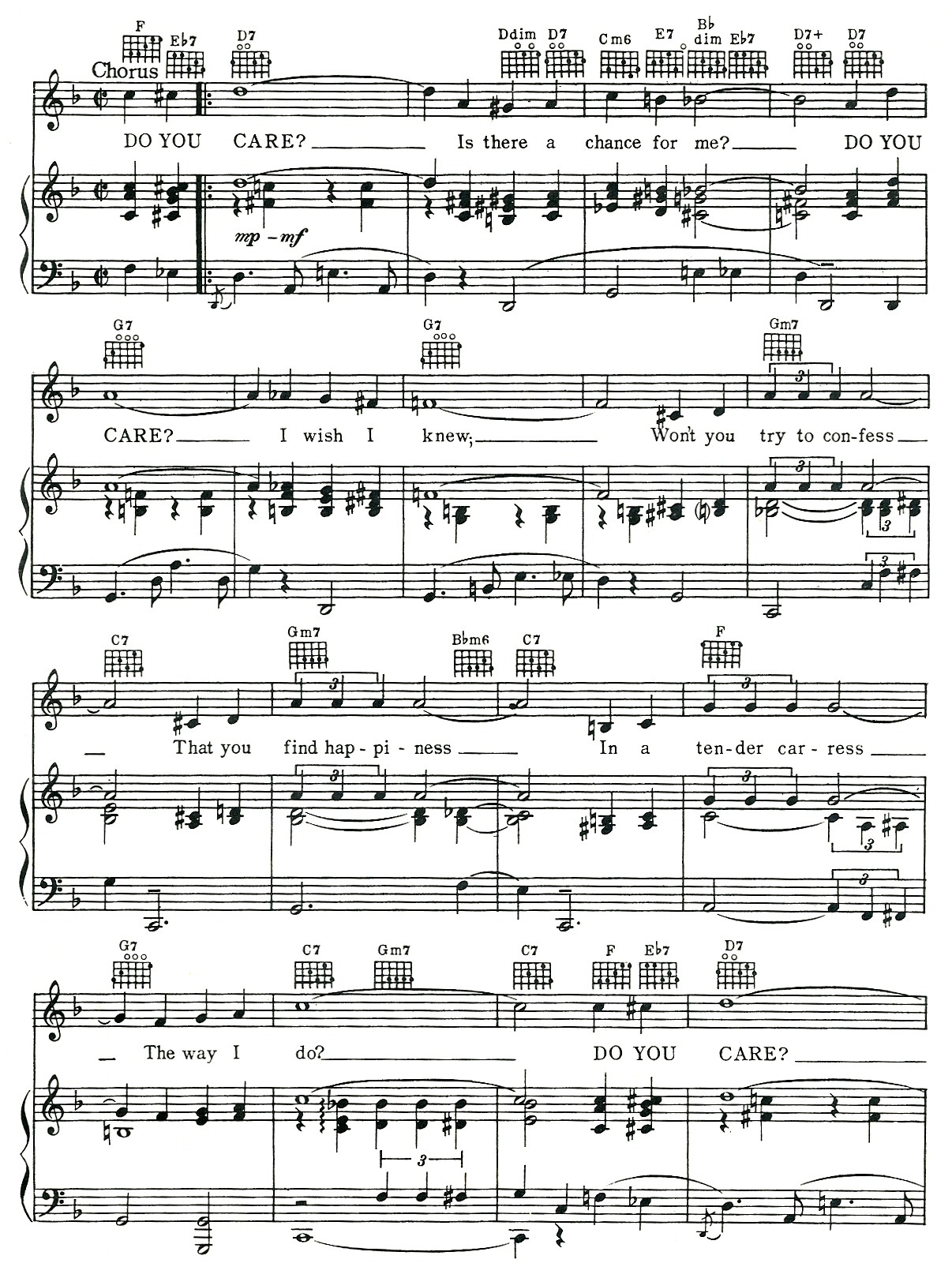
Hi. I downloaded, printed, and played all of the pieces. I was able to play the two simpler songs at 80 BPM without much trouble, but found the hymn and Do You Care very difficult. The chorale I made a complete mess of. I've been playing for four years, and concentrating on sight-reading for two.
I'm hoping that since you can contribute anonymously, we will get honest appraisals of how it went. The more people that contribute, the more fun and informative it will be for others.

I will stop posting recordings when I've received enough (or when I get tired of it), so don't delay!

Instructions

Step 1. Click on and download one, several, or all of the following sheet music pages and print them out (Alternatively, click here to download a single PDF file with all of the music).
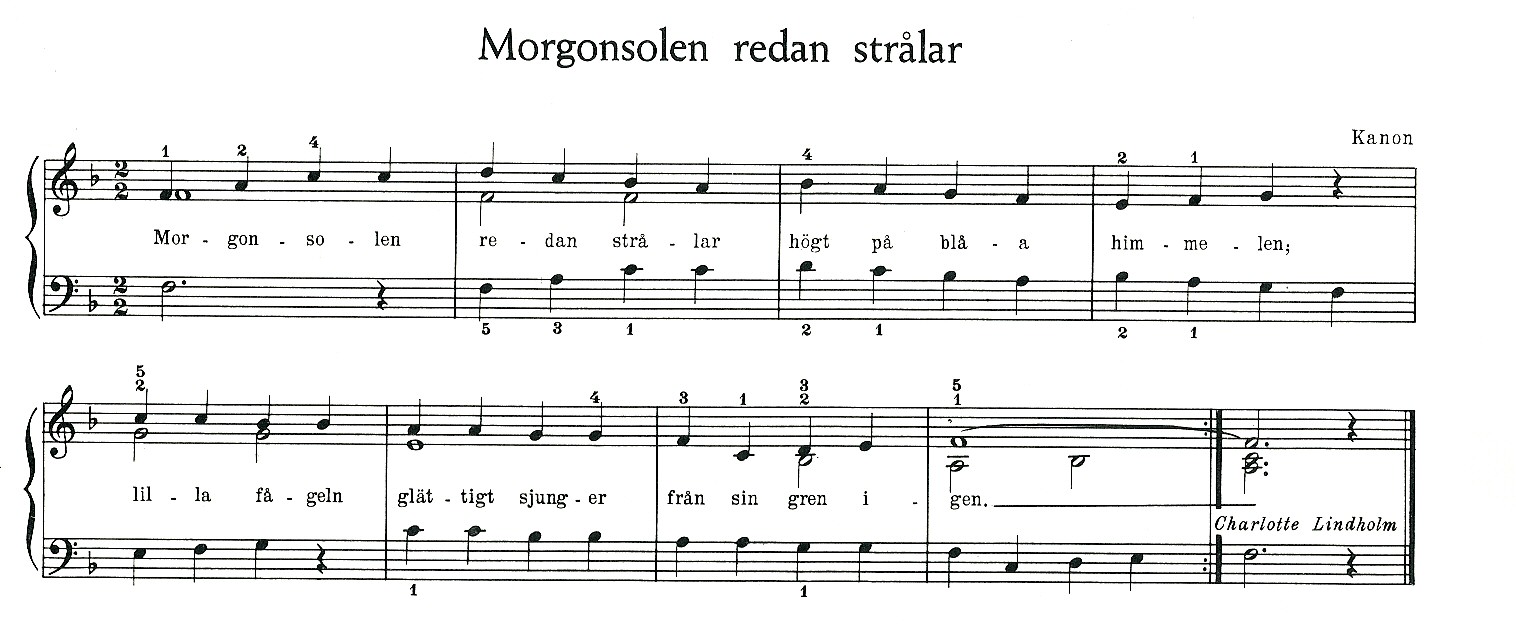
  1. Morgonsolen
  2. Child's Prayer
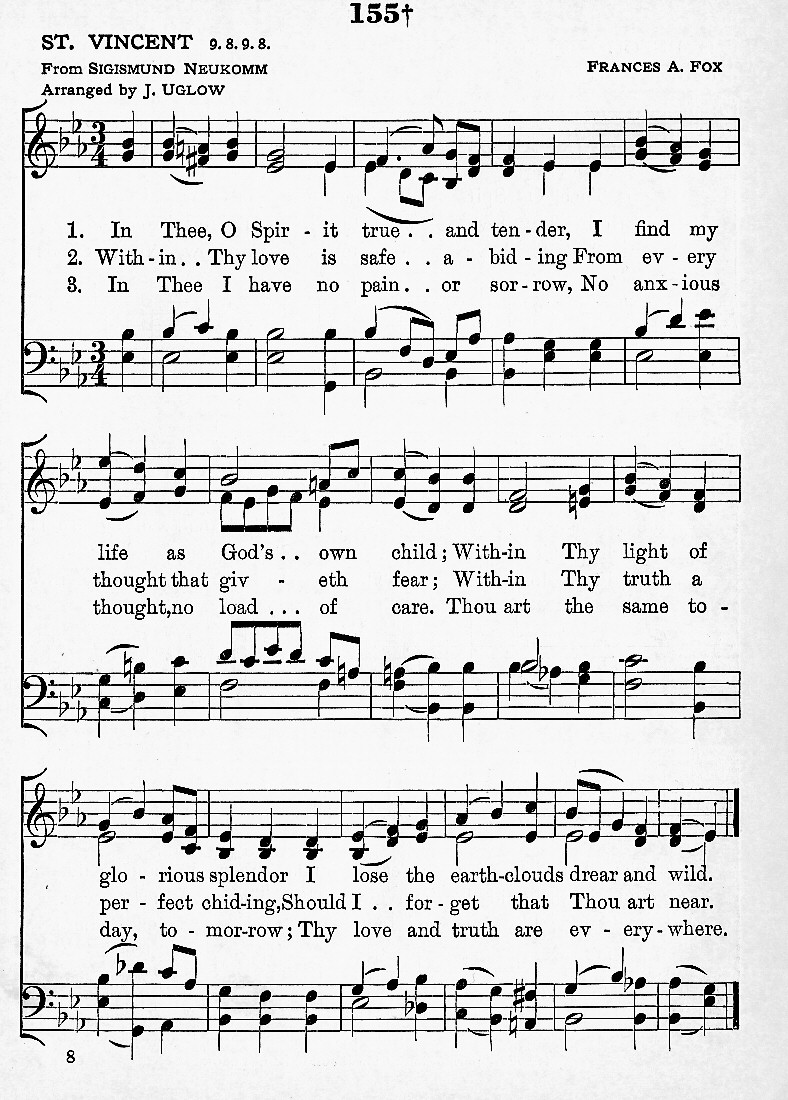
  3. Hymn 155
  4. Do You Care?
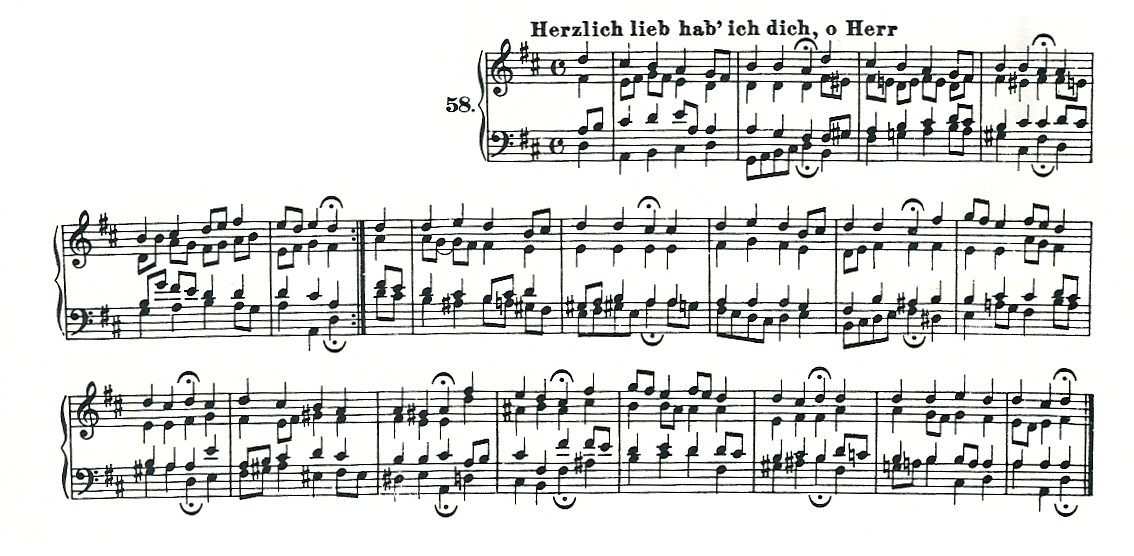
  5. Chorale 58
Step 2. If you are going to record yourself, prepare the recording system.

Step 3 (for each piece you play). Give yourself only a few seconds to look over the piece, checking key signature, etc.

Step 4. Choose a tempo that will work for you, and play the piece.

Step 5. Report on how it went. Either post a comment to this post (click Post a Comment below), or, if you made a recording, email the recording and comments to me at SightReadingSurvey@gmail.com (you may even send a link to a video!). Be sure to include information about how long you've been playing piano, and any comments on your experience or sight-reading level. You may choose to send the comment anonymously or to include your real name or a user name from a forum. You do not need to join or register in order to leave a comment.

That's all there is to it. I will post the recordings here, and the comments should appear immediately. If you have any questions, you may send them to SightReadingSurvey@gmail.com.

Survey Results (More Will be Added Later)

I could sightread all of them pretty well (I did 1,2,and 4) at about full speed. The last one was technically very easy but had too much going at once (for me at least) to sightread
it very well. - Sam
------------------------------
My experience: Adult beginner (9 months).

The first one, Morgonsolen redan stralar, was obviously the most easy of the five and the one I attempted. Most of the beats only have a single notes. The relatively small intervals (thirds, fourths and (one) fifth) did not present much of a problem. There was no tempo markings, but my first attempt was at what I thought was tempo. I missed 40% of the notes. By the third attempt, I was at maybe a 10% error rate (still at tempo).

I tend to approach my sight reading development in a two-fold process; developing accuracy and developing speed. Sometimes, I'll slow my tempo as much as it needs to be slowed, attempting to achieve near accuracy with the notes, without breaking the rhythm. Other times, like just now, I'll try to force (train) my eyes to read as fast as they can (at tempo), and disregard the missed notes. Its sounds horrible, but can think of no other way to work toward being able to one day play a piece at tempo on a cold read.

"Herzlich" was too complex for me to even try.

"Child's Prayer" seemed reachable, and I played a few measures, but gave up. The switch in the bass clef to treble always throws me completely off and I have to really think about the shift. The eight and sixteenth note beats are a concept I've learned, but not had much opportunity to practice, so I deemed this one too difficult to attempt.

The remaining two were too complex; either too many notes at the same time, too many accidentals, intervals too far apart for me to easily recognize, triplets spread over two measures.

Sigh.... Its a struggle, isn't it. - Akira
------------------------------
I found that the piece that was the easiest was the choral, "Herzlich lieb..." I think it's because it's a familiar pattern. I've been doing the Bach chorals in the Riemenschneider for about 3 months. However, I did not approach the chorals in "pure" sight reading style.

Now, when I do the Bach chorals it is an automatic eye to finger action that I have to let go to. I become deaf to the sound and don't consider it. I've noticed some people in different piano forums actually saying that about their playing - they don't hear it ahead of time. Bach is kind of mathematical and proportional.

I didn't like it when I tried to play the other pieces. I wasn't sure if it was a reaction to ineptitude: I'd love for it just to flow the first time around and don't want to admit that I can't make it happen. Maybe. Probably in part. I was trying to play them like Bach sight reading.

But there was also the feeling that this was music with swing and melody to it. I felt like I wanted to audiate it, hear it in my head, know the phrases and direction before actually playing it, and have that "music" inside me even while sight reading.

------------------------------
I have been playing piano for about three years and am a piano performance major at CCM. Pieces I have just recently "finished" (never really done, but you know what I mean) and am currently working on: Brahms Op.10 Ballades, Mozart's 21st concerto, Beethoven Pathetique Sonata, various Bach preludes and fugues, etc.

First piece - not a problem at full speed. Read it very easily.

Second Piece, Herz lieb hab' ich dich, o Herr - I had a good bit of trouble on. If you want me to play it with no mistakes, I have to go so slowly that nobody would ever sing along.

A Child's Prayer was much easier - not perfect though, but doable given the andante marking.

Hymn number 155 was about the same difficulty as a childs prayer, maybe a bit harder. A good deal of dropped notes but I could keep the rythm and the melody going.

I had some trouble with the last one, but it was easier than the chorale for me. I can play this piece fine but at a fairly slow pace.

My technique is far beyond your average 3 year student of piano, but I'm afraid my sight reading is just at that typical level, or even a bit below. It'd sad, really. - ComputerPro3
------------------------------
The first, third, and fourth pieces I played with almost no trouble at all. I have short fingers and had to rearrange the notes in the second piece so that I can play them. This slowed me down quite a bit. The last piece I found to be challenging. Being that I am a perfectionist, I prefer to focus on accuracy rather than speed. I had to play it quite slowly in order to get all the correct notes. - PlayerPiano
------------------------------
I sight read them easily, but I've been playing for 50 years, and sight reading well for perhaps 45. I work as an accompanist and sight read every day, like whippen boy (probably not as well as whippen boy though!). Are there things I find difficult to sight read? You betcha! Ever looked at the piano part of Boulez's flute sonatina? And as for Godowsky and his Chopin etude versions, I can't play the damn things, so why would I try and SR them? - CurraWong
------------------------------
I tried "Child's Prayer" and "Morgonsolen...", and read through without stopping but slowly though. had to slow down at a few spots in child's prayer, but overall they're ok to sight read for me.

that "Herzlich..." looks more difficult for me, because of counter points. i'd try it later... - Signa

Tuesday, April 22, 2008

19. Progress -- New Recordings

Not much new to report. I have been faithfully doing at least two hours of sight-reading each morning. I have good days and bad. I recorded the same songs that I posted on this site on March 24, and I'm encouraged that I've improved a bit more than I had realized. You can visit that post to see the sheet music for these recordings.

Of course, it's not technically sight-reading to play these pieces again, but it's been a while since I played them, so you can still make a comparison. For the Rondino, I had a technical problem when recording, so I had to record it again, so that one had a little more practice this time around.

Hymn 296 Then
Hymn 296 Now

Rondino Then
Rondino Now

Humpty Dumpty Then
Humpty Dumpty Now

Goosey Goosey Gander Then
Goosey Goosey Gander Now

Tom Tom Then
Tom Tom Now

Saturday, April 5, 2008

18. Hit the Accelerator

Well, things are starting to happen. Today I got a book out from the library that I had borrowed back in December, and pieces that I could barely get through at 50 BPM I can now read at 80-102 BPM. What's better is that I have a feeling that the music just flows out.

The music is very easy, but hopefully this is a sign of things to come.

Hitting the Accelerator

Prompted by a post by Akira in a piano forum, I realized that instead of choosing a tempo at which I make only a few mistakes, perhaps I should speed things up a bit. That is, play at a speed at which I make lots of mistakes. This seems to be a good thing.

For the last few days I've been choosing tempos that are fast enough that I can just barely keep track of all the notes. Above this tempo, I start to ignore parts of the music (usually the left hand); at this tempo, I feel like I'm just holding on by my fingertips.

This works well because it forces me to interpret the notes quickly, and move my hands quickly.

A lot of people suggest that your sight-reading will improve rapidly if you play a lot of duets with others. If practical (it's not practical for me), this is a good idea since it forces you not to stop and go back and correct your mistakes. But I'll bet that another reason this is good is that you probably play things faster than you would if you were practicing alone.

I'll let you know whether this new paradigm works for me.

Hymnal on Steroids

Yesterday I received a copy of Bach's 371 Harmonized Chorales and 69 Chorale Melodies, which was recommended on a forum. But found that it's like hymns on steroids, and is too difficult for me now. The print is very small, too.

Monday, March 24, 2008

17. Progress Report with Recordings

I continue to make slow but steady progress. While I see a real difference in how well I sight-read, I'm still surprised that I haven't progressed further.

I wish I had some revolutionary insights to pass along to others suffering along this path. I will say that to some extent, all that matters is doing it. That is, I've talked a lot about things like recognizing intervals, but if you do enough sight-reading, that's going to happen whether you try to force it or not.

One article I saw said that an important component of learning sight-reading involved learning hundreds of common patterns. That's happening for me. That is, I'll see some common pattern and be able to play it instantly. I can take in larger blocks of notes at once. There's an indescribable change in how I see the music.

Unfortunately, I find that even when playing the simplest of music, I can still have a problem reading some part of it. And I am still not good at playing anything fast.

I'm hoping that I'm going to progress more quickly now -- as if what I've learned so far will let me gain traction, and move faster. My #1 short-term goal is to get better at looking ahead in the music.

Samples of My Playing
Well, I've put this off long enough -- it's time to let you hear some of my sight-reading (oh, man, do I have to?). Embarrassing, but this is the best way to show what 3.5 months of heavy-duty sight-reading has bought me.

The first sample is of the song "On a Slow Boat to China." Here's the music -- not terribly challenging, but not super easy either.

Click here to listen to me sight-reading this for the first time. Pitiful, huh? You can hear how slowly I have to play it. But at least I was good about not going back and correcting mistakes, right? I also noticed, in listening to it and reading along, that I'm playing some parts the way that I remember the tune, rather than playing exactly what's written.

Click here to hear how I sound after I've read it through 5-10 times. In this recording, after I read through this first page, I start playing as if it were a lead sheet. That is, I ignore what's written, play the chord in the left hand, and play the melody in the right.

Next is a hymn from my 1937 Christian Science Hymnal, which I picked up for free from www.PaperBackSwap.com:

Based on my handling of measure 2, I'm probably not going to heaven, but click here to listen to me play this with a church organ sound.

Now, here's an early classical piece:

Click here to hear it sight-read. Beautiful, huh? Sign me up for Carnegie hall. I have the most trouble with music that has separate musical lines going on at once. And for those of you who noticed that I didn't follow the dynamics, phrase markings, or staccato notations, two words: bite me!

And I'll finish off with three sophisticated melodies, "Humpty Dumpty," "Goosey Goosey Gander," and "Tom Tom the Piper's Son." These are from It's Easy to Play Nursery Rhymes, which actually has good arrangements with some surprisingly nice chord voicings.

Click here to listen to me knock Humpty Dumpty off his wall.

Click here to bring Goosey Goosey to life.

Click here for my tasteful rendition of Tom Tom.

So ends my recital. Hopefully, when I'm done with my year of sight-reading, I will be able to sight-read pieces like these at a normal tempo. We'll see.