Tuesday, September 15, 2009

Progress (1.75 Years)

Things are still coming together, but more slowly than expected. I see the end of the tunnel, but I figure it's about two years away. That is, I expect that in another two years, I'll be a really good sight-reader.

Before continuing, let me show you where I stand. Here are two pieces being sight-read, one easy, one a bit harder (click on the images for a full-sized version).


Click here to hear me sight-read Wabash Cannonball.


Click here to hear me sight-read When my Sugar...

So, I'm getting the hang of things, but I'm still quite slow. I just can't keep up if I increase the tempo. (I realize that got some off the rhythms wrong on the latter song.)


Not Looking at my Hands

One thing that I'm really, really good at is not looking at my hands. I can read an entire song, and not even glance down once, even when there are big jumps. I highly recommend getting this ability nailed. It feels really cool, and I never have to worry about losing my place in the music.

There are two things going on here: Feeling the keys, and knowing where they are.

Concerning feeling the keys, you have to get into the habit of caressing them all the time. Imagine that you are a lovesick teenager, and the keys are your girlfriend. You just can't get enough of touching her/them.

As for knowing where they are, I should give some credit to the book Super Sight Reading Secrets by Howard Richman (more on that book later). His keyboard orientation drills made me realize that I could move my finger to a note pretty accurately with my eyes closed, even if I wasn't starting from a known note. Here's the exercise I do:

I make sure I am sitting right in front of middle D (that is, with my belly button lined up with the middle of the middle D key). Then I close my eyes, put my hands in my lap, then think of a note and move a finger to it. I found that often I got the note exactly right, and my accuracy improved with this drill. In other words, the feeling of where your arm is can be pretty good for hitting the note you want.

Combined with feeling the keys, this ability can help you eliminate your need to look at the keys. It's true that doing this is a lot easier one note at a time than in the middle of some complex song. Also, I sometimes get "desynchronized" with the keys, and play, for example, an E when I'm expecting a B. But once you get some ability and confidence here, you might find that you can make those big skips without thinking about them.

I'm hoping that the habit of not looking down at my hands will get so ingrained in me, that I won't do it even if I'm playing in public or am nervous.


Looking Ahead

Looking ahead as I'm playing is still a struggle for me, and I'm still working on it. I play better when I do it, but that just may mean that the song is easier, and it gives me a chance to look ahead. Sometimes I try to look ahead just a half measure or so. I played prelude one in Bach's Well-Tempered Clavier yesterday, and was able to zip through it with almost no errors. Why? Because each measure repeats the same five notes twice, so there's plenty of time to read and understand the next measure as I'm playing the current one. If I can just get that same idea working for other songs, I'll be set.

That's it for now, sight-reading fans. Please leave a comment if you're finding this blog useful!


Monday, March 23, 2009

Progress Report (1.25 yrs)

Since finishing the year of sight-reading, I've continued reading at least 30 minutes a day, sometimes significantly more. I'm reading only modern/pop/standards stuff -- no hymns or classical.

I'm quite pleased with my recent progress. It feels like things are finally coming together. As a side benefit, I'm noticing more confidence in my jazz reading (that is, reading melody lines while playing chords). I'm also finding that working with transcriptions or educational piano stuff like this


is a lot more convenient, since I can play the examples much faster.

As an example of my progress, today I sight-read this piece pretty well (but with a lot of mistakes) at about 50 BPM:


I'm realizing that much of my progress is based on a new-found quick, involuntary understanding of the notes on the page. That is, I see, I understand, I play. To show you what I mean, look at the following sentence, but don't read or understand it:

I went to the store.

I'll bet that there isn't one person among you who could look at that sentence without reading it and understanding what it meant. That's what I'm now getting with the music. I see the notes and instantly have a feeling for what they mean and how I'd move my hands to play them. I also realize that this is something that takes time to develop.

Shorter Practice Time

Here's a comment concerning 30 minutes versus two hours per day: One benefit to the shorter time is that perhaps I do less practicing of bad habits. For example, it's hard to force myself to look ahead all the time when playing for two hours. As a result, I'm doing a lot of practicing of sight-reading without looking ahead. When practicing for a shorter time, I can focus more on practicing the good habits.

Things I am continually working on that seem to help:

  • Focus on reading ahead
  • Make sure I don't look down at my hands at all
  • Feel the keys
  • Always play with the metronome
So now I'm just continuing to sight-read, attempting to gradually increase the tempo at which I play songs.

Tuesday, December 9, 2008

I Did It!

Today I fulfilled my vow to practice sight-reading for two hours a day for an entire year! Of course there were some days that I missed, and some days when I practiced less than two hours, but I'm sure I put in at least 650 hours of sight-reading. I read through two hymnals seven times each!

How did it turn out? Well, I didn't progress nearly as far as I had expected to. For example, I thought that after that much practicing I would be able to play any hymn at any reasonable speed. Instead I can play easier hymns at about 85-100 BPM, and most hymns at 60 BPM. I thought I'd be able to rocket through any "Easy Piano" piece, and play most pop or jazz music without too much trouble, but that is not the case.

If someone were to say "Hey, Al plays piano, let's have him accompany us with this Christmas carol music!" could I do it? Maybe. If the music weren't too difficult, if the singers weren't too discriminating, or if I had a chance to run through them a few times, then the answer is yes. Otherwise the results would be sketchy. Here's what you might expect: these are two Christmas songs that I've played multiple times, but have not memorized:

Rudolph the Red-nosed Reindeer
Have Yourself a Merry Little Christmas

So, while I'm disappointed that I didn't reach those goals, I am pleased to have made solid progress. I am no longer a sight-reading dimwit. Sometimes I can read through a new piece well, and get a feeling for what it would be like to be a great sight-reader.

Below I'll give advice to others who are just starting out and talk about where I go from here, but first let's look objectively at how far I've come.

Progress Recordings

As I've gone along, I've periodically recorded a small number of songs to track my progress. Of course, each time I play one of these benchmarks, I learn it a bit. However, playing them a few times over the course of a year doesn't make that much difference. I've played one of these (hymn 296) about seven times (once each time I went through the hymnal), but I don't think that has made a big difference.

I regret that I didn't record my playing when I started out. The first progress recordings were made after I'd been working on sight-reading for 3.5 months. Anyway, here they are.

Hymn 296 After 2.5 Months
Hymn 296 After 4.5 Months
Hymn 296 After 1 Year

Here's another hymn that I hadn't recorded previously. Although on a better day I might have done better, these two hymn recordings give a good indication of where I stand after one year of sight-reading.

Goosey Goosey After 2.5 Months
Goosey Goosey After 4.5 Months
Goosey Goosey After 1 Year

Rondino After 2.5 Months
Rondino After 4.5 Months
Rondino After 1 Year

Humpty Dumpty After 2.5 Months
Humpty Dumpty After 4.5 Months
Humpty Dumpty After 1 Year

Slow Boat to China after 3 months
Slow Boat after 4.5 months
Slow Boat after 1 Year

Although I never recorded it before, I had noted in an early post that after 1.5 months I could play this song:

at 55 BPM without too many mistakes. Click here to hear it sight-read today (1 year) at 80 BPM.

Surprisingly, some of these didn't improve much between 4.5 months and one year. Perhaps I just wasn't playing well today. Another possibility is that I played too many hymns and not enough other types of music, resulting in less progress with those types. Note that after playing Slow Boat two more times, it sounded a lot better (Slow Boat after two run throughs). This represents a benefit of my improved sight-reading -- it makes it faster to practice something. I can read through it multiple times in much less time.

Note also that I was more nervous than usual -- I knew that I had only one chance to play it right, and that whatever I recorded would be published here on the Internet.

Advice to Others Seeking To Improve Their Sight-reading Quickly

  1. If you're like me, it's going to be a lot more difficult than you expect. I thought that after a month or two, I'd start to gain traction, and progress rapidly from that point. Instead it's been a slow, steady slog all year long. Maybe you will learn faster. I generally learn things pretty quickly, especially if I put in a lot of effort, but on the other hand, I am over 50 years old, and may have missed the critical period for learning to sight-read. If you're like me, you will need a lot of willpower.
  2. Record yourself extensively on day one. I waited 2.5 months before recording myself, mainly because I didn't want any record of how atrocious my sight-reading was. Now I wish I could compare today's playing with that of a year ago.
  3. If you can afford the wait, I expect that you'll do better with four years of 30 minutes per day than with one year of 2 hours per day. I don't have any evidence for this, but I suspect that that's why my 650+ hours of sight-reading didn't pay off as well as expected.
  4. Remember in my earlier posts I talked about seeing intervals versus notes, things like that? Well forget it, that's all BS. You just sight-read a lot and you'll improve. I'm not seeing intervals, I just see the music on the page and am increasingly able to quickly convert that into movements of my hands and fingers.
  5. Sight-read the type of music you want to play. I worked on hymns over 50% of the time even though that's not my goal. Hymns are the most comfortable thing to play and quite enjoyable. Each one is short, you know what to expect, the harmonies sound great, and most notes fall within a set range. But unless you want to be a church organist, be sure to include a lot of other types of music as well. The samples above show how I improved more for hymns than for other types of music.
  6. Finally, I still feel that looking ahead is an important aspect of good sight-reading. The better you get, the easier that is, but I still have to remind myself to consciously look ahead. When I do that, it seems to help.

Where Do I Go From Here?

I'm hooked on sight-reading, and still want to be good at it. My plan now is to practice sight-reading at least 30 minutes per day (instead of two hours). I can see the light at the end of the tunnel, so I'm not going to quit now. I'll reluctantly put aside the hymns for a while and concentrate on other types of music. I may update this blog from time to time. I plan to meet my original goals by this time next year.

So thanks for visting my blog -- I hope this has been of use to you fellow sight-readers. Good luck to you!

- Al

Thursday, September 4, 2008

23. Practice Session Recorded

Here's a sample of what it sounds like when I practice sight-reading. This recording is the first ten minutes of my hymnal sight-reading practice today. I start with Hymn #288 in the Presbyterian hymnal, and continue through the book from there.

Click here to hear it.

I've mentioned how some days seem better and some worse. This one was closer to the "worse" side. It will be a bit painful to listen to at times, but I'd say it gives a fair indication of where I stand right now.

Tuesday, August 19, 2008

22. Still Working Away

Just wanted to let you know that I haven't given up -- I'm still working at it. I've had to take a few days off here and there when I had important gigs coming up, and needed to work on some pieces. Also, I have to admit that there are some days when I only work for an hour instead of two. I've found that it's easiest on my back if I don't work two hours in a row, and sometimes I don't get back to the piano for that second hour.

I've cut down on my jazz gigs until December so I'll have more time for sight-reading.

I generally do an hour of hymns (I'm coming up on five times through both hymnals) plus an hour of popular or traditional music.

I'm still happy about what I've learned but disappointed that I haven't learned more. This one of the hardest things I've done.

I've also noticed an improvement of my single line + chord jazz sight-reading, which is nice.

I have less to report and talk about, so if you don't see any posts for a while, it doesn't mean that I've given up!

Tuesday, June 10, 2008

21. Halfway There

It's now been six months since I started my piano sight-reading; I'm halfway towards my goal of two hours per day for one year.

I know it doesn't make sense, but I'm both amazed at how far I've progressed, and disappointed that I haven't gotten further. Some apparently simple songs give me a lot of difficulty, however, it's exciting to be able to read pieces which I know would have been impossible for me to play six months ago.

I've settled into the following routine: I start sight-reading early in the morning (7 or 8 AM -- I'm a morning person) and read one hour of hymns followed by an hour of other music. I've read through both hymnals twice. If I'm not having a good day, I'll allow myself to skip anything with four or more sharps. I prefer the flat keys -- perhaps because of my trombone background. I especially like Eb.

I'll set the metronome somewhere between 50 BPM for a hard hymn, and 80 for an easy one. If I like a hymn, I'll repeat it a few times at faster and faster tempos. Sometimes I'm surprised to find that it's not that much more difficult at a faster pace.

For popular music, such as this:

I usually play without the metronome, but will soon be using the metronome at 50 BPM.

Here's an interesting phenomenon that I've noticed: sometimes I can be reading a song (a hymn for example), start thinking about something else, and find that I'm still playing. I'm neither better nor worse when this happens, but my mind is elsewhere, and I'm sight-reading on autopilot. Don't' know if this is good or bad, but it is interesting.

Ask some expert sight-readers what they're doing when sight-reading, and sometimes they'll say "I don't know -- it just happens." I'm hoping that this blog is valuable because I'm reporting what I find as I learn. Perhaps I can report what's happening for me before I cross over to the other side. Here are some insights:

It's Not the Intervals, Stupid!

In earlier posts I spent a lot of time talking about recognizing intervals instead of individual notes. Well, I now think that may be a waste of time. As you get better, you are recognizing patterns of notes, and it doesn't matter whether you try to recognize intervals or not. It's just going to happen, if you practice enough, that you recognize patterns.

I'm getting into the "I don't know -- it just happens" zone, but let me try to explain with an example. Here's the start of a hymn from an earlier post that is quite easy for me to play:

When I see this, the notes in the first measure are seen as "F chord, C chord, Dm chord, C chord." Or maybe I'd say that my mind is saying "Oh yeah, there's that common F chord pattern with 1 and 3 in the bass, and 5 and 1 in the right hand, etc." I'm not always thinking in terms of chords, but there's often some thought about how the notes make sense.

Those patterns of notes come up so frequently, that it's just a "recognize it and play it" situation. I don't know if this is good or bad, but it is what is happening for me. As soon as a hymn gets out of the typical range of notes, it's harder to play, because the patterns aren't as familiar. Same thing for less-common key signatures.

Thinking about intervals does help whenever I see a pattern such as this:

At which point I don't think about individual notes, just think about "moving the interval around" in the current scale.

Again, it may be bad advice to say that you don't need to pay attention to intervals -- I'm just relating what has been happening with me.

Looking Ahead

I still feel that I'm not looking ahead enough. I am still forcing myself to do it, at least when I think of it, and hope that at some point it will become automatic. This doesn't seem to be something that will just happen as I keep playing.

Once in a while I do pretty well at looking ahead, and it feels good. There's a kind of rapid "look here, look there, up there, down there" feeling that seems to be effective. Like a little bird flitting around. I rarely am looking forward more than a half measure or so, unless the current measure is very easy. What often happens is this: I decide that I'm really going to concentrate on looking ahead for this piece. I do pretty well until a difficult measure comes up. Then I get stuck figuring out the notes I'm playing, and after that have a difficult time getting ahead again.

I still do less well when skipping to a new line -- not sure what that means.

Good Days and Bad Days

I continue to see this: one day I feel like I'm doing great, and really getting the hang of this sight-reading thing, and then the next day I'm amazed at how bad I am. You might think "Oh, you just happen to play more difficult pieces on a bad day." However, recently I made a list of hymns that were quite easy for me to play. On a bad day, I tried those, and didn't do so well.

Playing without the metronome usually makes me feel that I'm doing better -- guess I must be slowing down at the more difficult places.

I'll be Twice as Good

If I'm twice as good at sight-reading on Dec 10, 2008 as I am today, I'll be satisfied.

Tuesday, May 6, 2008

20. Your Turn!

Welcome to the audience participation part of this blog. In this post I invite you to sight-read one or more pieces (below), and tell us how it went. I want you to contribute!

You can even email me recordings of your performance if you wish. Participate anonymously, or choose to reveal your identity.

I thought it would be fun to let you contribute to this blog by playing one or more of the pieces below, and tell us how it went, and, if you wish, send me a recording of you playing the pieces (I will post the recordings here). If you include a brief description of your experience level, it will give others a feeling for the correlation between experience and playing. For example, an ideal response might sound like this:
Thanks for the survey -- what a great blog you have! I think I love you! I played Hymn 155, and you'll hear from the recording that I had no problems with it, except for one mistake in the fifth measure. I've been playing piano for 63 years. -- PianoNut27 from the PianoWorld forum.
or
Hi. I downloaded, printed, and played all of the pieces. I was able to play the two simpler songs at 80 BPM without much trouble, but found the hymn and Do You Care very difficult. The chorale I made a complete mess of. I've been playing for four years, and concentrating on sight-reading for two.
I'm hoping that since you can contribute anonymously, we will get honest appraisals of how it went. The more people that contribute, the more fun and informative it will be for others.

I will stop posting recordings when I've received enough (or when I get tired of it), so don't delay!

Instructions

Step 1. Click on and download one, several, or all of the following sheet music pages and print them out (Alternatively, click here to download a single PDF file with all of the music).
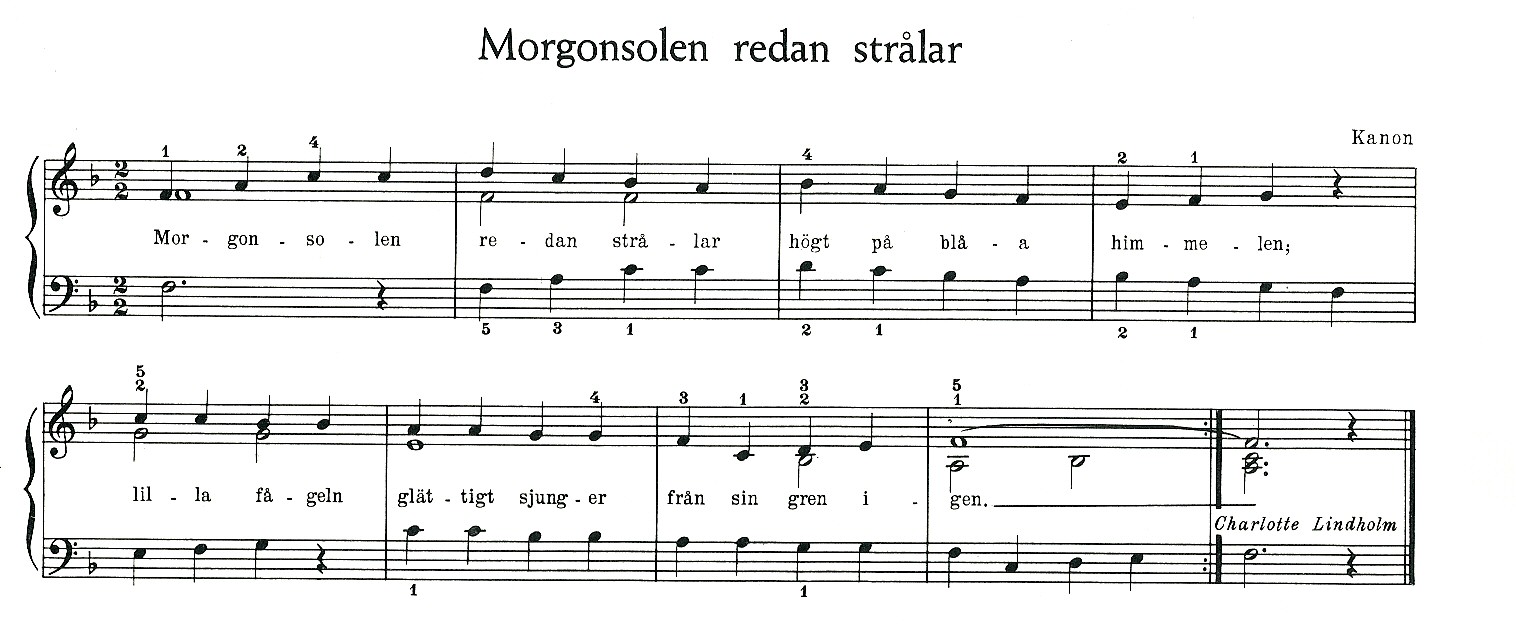
  1. Morgonsolen
  2. Child's Prayer
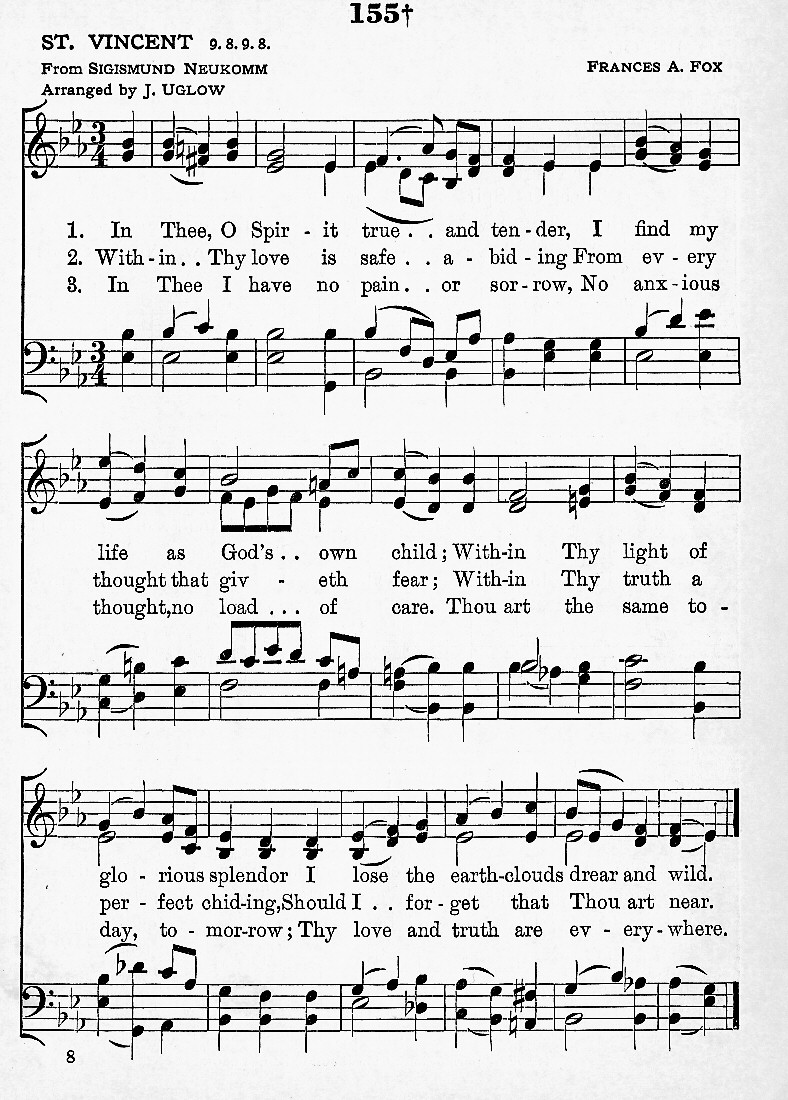
  3. Hymn 155
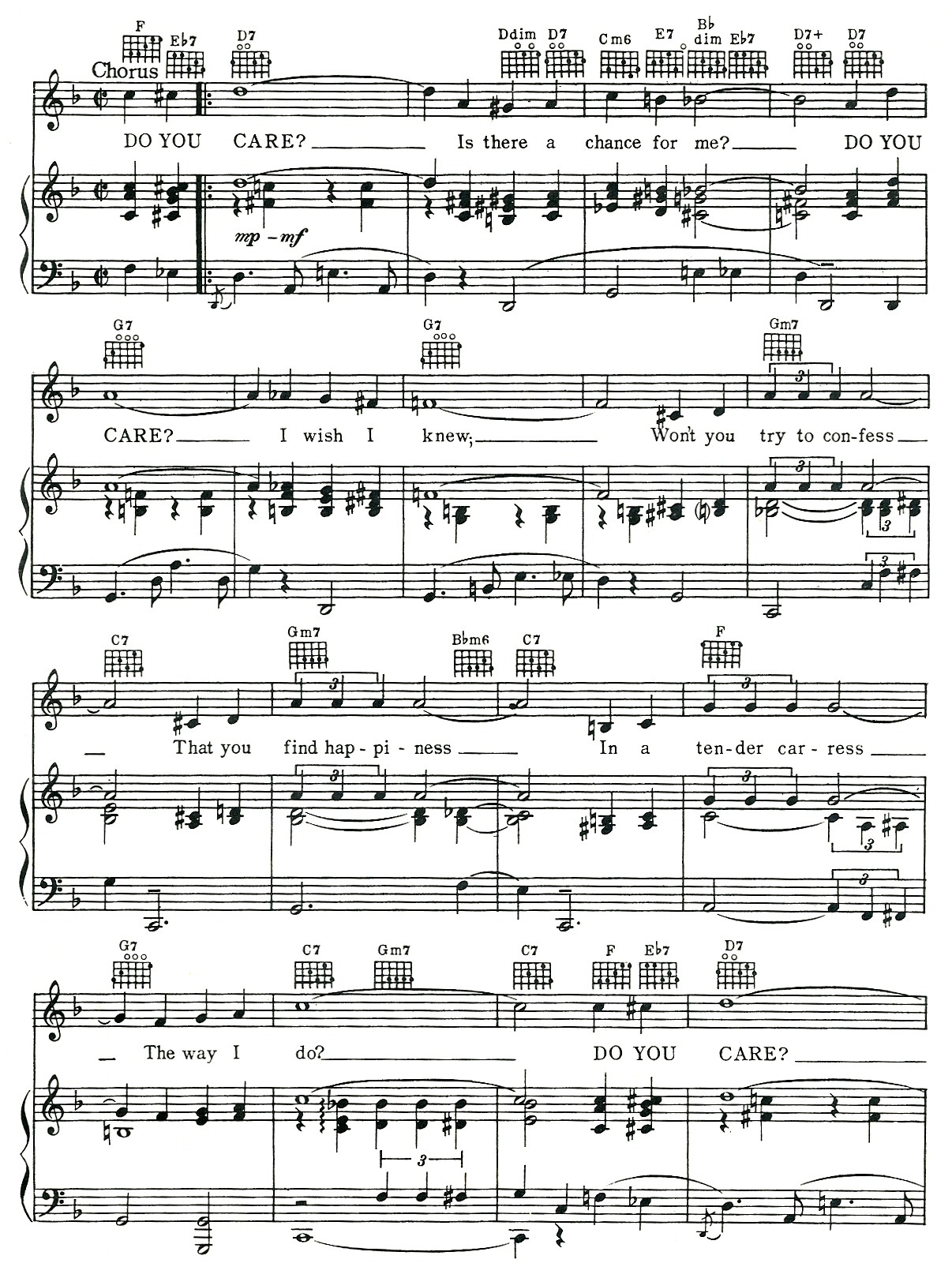
  4. Do You Care?
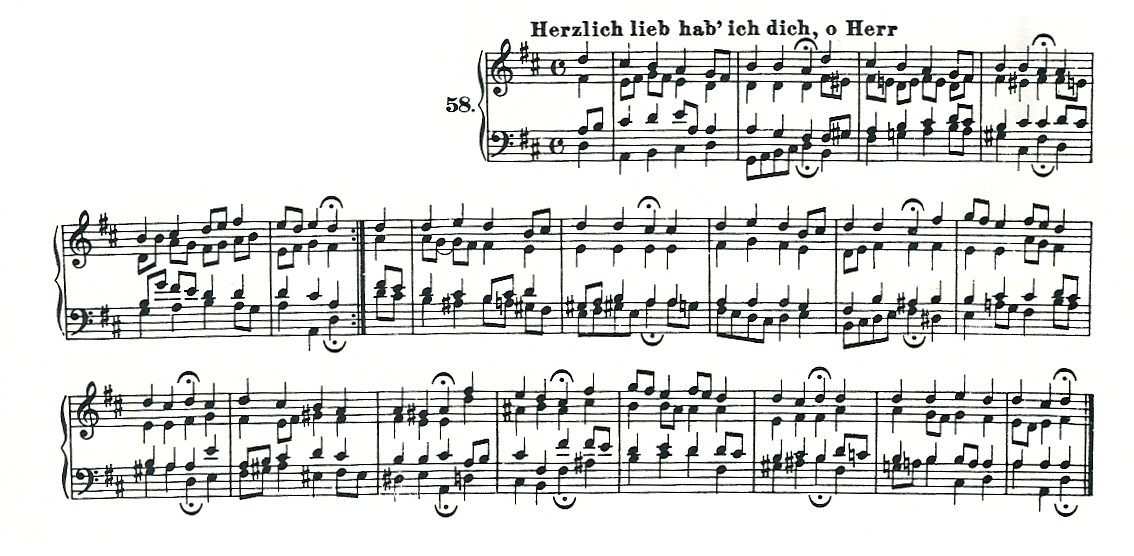
  5. Chorale 58
Step 2. If you are going to record yourself, prepare the recording system.

Step 3 (for each piece you play). Give yourself only a few seconds to look over the piece, checking key signature, etc.

Step 4. Choose a tempo that will work for you, and play the piece.

Step 5. Report on how it went. Either post a comment to this post (click Post a Comment below), or, if you made a recording, email the recording and comments to me at SightReadingSurvey@gmail.com (you may even send a link to a video!). Be sure to include information about how long you've been playing piano, and any comments on your experience or sight-reading level. You may choose to send the comment anonymously or to include your real name or a user name from a forum. You do not need to join or register in order to leave a comment.

That's all there is to it. I will post the recordings here, and the comments should appear immediately. If you have any questions, you may send them to SightReadingSurvey@gmail.com.

Survey Results (More Will be Added Later)

I could sightread all of them pretty well (I did 1,2,and 4) at about full speed. The last one was technically very easy but had too much going at once (for me at least) to sightread
it very well. - Sam
------------------------------
My experience: Adult beginner (9 months).

The first one, Morgonsolen redan stralar, was obviously the most easy of the five and the one I attempted. Most of the beats only have a single notes. The relatively small intervals (thirds, fourths and (one) fifth) did not present much of a problem. There was no tempo markings, but my first attempt was at what I thought was tempo. I missed 40% of the notes. By the third attempt, I was at maybe a 10% error rate (still at tempo).

I tend to approach my sight reading development in a two-fold process; developing accuracy and developing speed. Sometimes, I'll slow my tempo as much as it needs to be slowed, attempting to achieve near accuracy with the notes, without breaking the rhythm. Other times, like just now, I'll try to force (train) my eyes to read as fast as they can (at tempo), and disregard the missed notes. Its sounds horrible, but can think of no other way to work toward being able to one day play a piece at tempo on a cold read.

"Herzlich" was too complex for me to even try.

"Child's Prayer" seemed reachable, and I played a few measures, but gave up. The switch in the bass clef to treble always throws me completely off and I have to really think about the shift. The eight and sixteenth note beats are a concept I've learned, but not had much opportunity to practice, so I deemed this one too difficult to attempt.

The remaining two were too complex; either too many notes at the same time, too many accidentals, intervals too far apart for me to easily recognize, triplets spread over two measures.

Sigh.... Its a struggle, isn't it. - Akira
------------------------------
I found that the piece that was the easiest was the choral, "Herzlich lieb..." I think it's because it's a familiar pattern. I've been doing the Bach chorals in the Riemenschneider for about 3 months. However, I did not approach the chorals in "pure" sight reading style.

Now, when I do the Bach chorals it is an automatic eye to finger action that I have to let go to. I become deaf to the sound and don't consider it. I've noticed some people in different piano forums actually saying that about their playing - they don't hear it ahead of time. Bach is kind of mathematical and proportional.

I didn't like it when I tried to play the other pieces. I wasn't sure if it was a reaction to ineptitude: I'd love for it just to flow the first time around and don't want to admit that I can't make it happen. Maybe. Probably in part. I was trying to play them like Bach sight reading.

But there was also the feeling that this was music with swing and melody to it. I felt like I wanted to audiate it, hear it in my head, know the phrases and direction before actually playing it, and have that "music" inside me even while sight reading.

------------------------------
I have been playing piano for about three years and am a piano performance major at CCM. Pieces I have just recently "finished" (never really done, but you know what I mean) and am currently working on: Brahms Op.10 Ballades, Mozart's 21st concerto, Beethoven Pathetique Sonata, various Bach preludes and fugues, etc.

First piece - not a problem at full speed. Read it very easily.

Second Piece, Herz lieb hab' ich dich, o Herr - I had a good bit of trouble on. If you want me to play it with no mistakes, I have to go so slowly that nobody would ever sing along.

A Child's Prayer was much easier - not perfect though, but doable given the andante marking.

Hymn number 155 was about the same difficulty as a childs prayer, maybe a bit harder. A good deal of dropped notes but I could keep the rythm and the melody going.

I had some trouble with the last one, but it was easier than the chorale for me. I can play this piece fine but at a fairly slow pace.

My technique is far beyond your average 3 year student of piano, but I'm afraid my sight reading is just at that typical level, or even a bit below. It'd sad, really. - ComputerPro3
------------------------------
The first, third, and fourth pieces I played with almost no trouble at all. I have short fingers and had to rearrange the notes in the second piece so that I can play them. This slowed me down quite a bit. The last piece I found to be challenging. Being that I am a perfectionist, I prefer to focus on accuracy rather than speed. I had to play it quite slowly in order to get all the correct notes. - PlayerPiano
------------------------------
I sight read them easily, but I've been playing for 50 years, and sight reading well for perhaps 45. I work as an accompanist and sight read every day, like whippen boy (probably not as well as whippen boy though!). Are there things I find difficult to sight read? You betcha! Ever looked at the piano part of Boulez's flute sonatina? And as for Godowsky and his Chopin etude versions, I can't play the damn things, so why would I try and SR them? - CurraWong
------------------------------
I tried "Child's Prayer" and "Morgonsolen...", and read through without stopping but slowly though. had to slow down at a few spots in child's prayer, but overall they're ok to sight read for me.

that "Herzlich..." looks more difficult for me, because of counter points. i'd try it later... - Signa